By William Chandler

(Light spoilers from the first ~4 hours ahead)
Throughout my nearly 100 hour playthrough of The Witcher 3: Wild Hunt, I couldn’t help but constantly recognize ways in which the game continued to make the story of the main quest feel compelling. A surefire way to break the immersion, sure, but it felt like something truly worthy of recognition. After all, often my least favorite parts of open world RPGs are the main story, yet The Witcher 3 manages to make its main questline feel important and consistently interesting despite the dozens of hours of other content also vying for the attention of the player. This is, of course, a natural extension of the game being all around really damned good, but there’s definitely more to it than this.
It certainly helps that the main objective at any point in the game can be boiled down to a single line without feeling meaningless. It starts off as “Find Yennefer.” It’s pretty clear from the game’s opening moments that Yennefer is a person of great importance to Geralt and that their relationship extends beyond one of mere intimacy, especially since his dream initially depicts a fairly simple and relatively mundane version of their lives together. A lazy and beautiful morning at Kaer Morhen with some of the people Geralt cares for most. Geralt the character clearly feels compelled to find Yennefer but why would the player controlling Geralt feel the same?
The dream continues on to depict his relationship with Ciri, a young girl who takes the role of his protégé but perhaps somewhat of a daughter figure as well considering their apparent closeness. Everything then goes quickly into nightmare territory with Kaer Morhen coming under siege by a force of overwhelming power and Ciri being attacked directly.
While those with knowledge of the past games, or perhaps even the books, will recognize all of the shit that Geralt and Yennefer have actually gone through together, these details are unnecessary thanks to the game’s presentation of the dream and Geralt’s brief discussion with Vesemir afterwards, should the player choose to let Geralt open up about it. Geralt even states that he dreamt of he and Yen together at Kaer Morhen despite the fact that she had never even actually been there, making the beginning clearly idealized. In this conversation it also becomes readily apparent that Geralt is worried by the dream although fails to go into much detail about why. One thing is certain though. It seems as though Yennefer is in danger and that danger may extend to Ciri as well.


 Sort of.
 Dying Light – Developed by Techland and Published by Warner Bros.

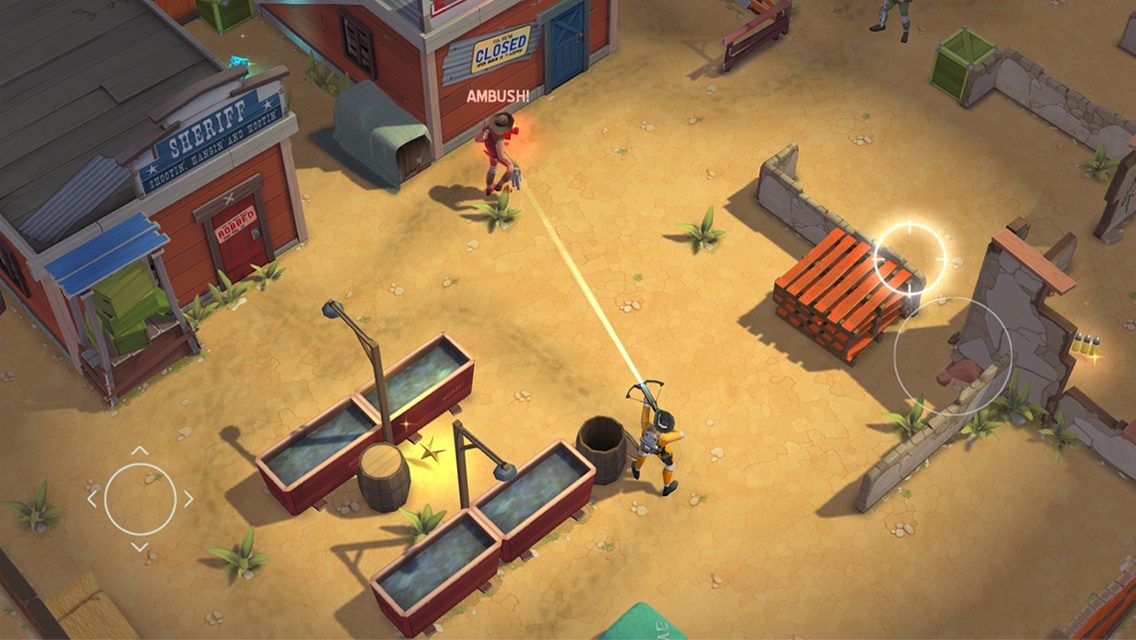 Space Marshals actually reminds me quite a bit of 2014’s Counterspy, both in good ways and bad. Counterspy was, of course, pretty strictly 2D whereas Space Marshals is more isometric, but the minute to minute gameplay isn’t all that different. Simply running headlong into a room full of enemies will only serve to get you straight iced in Space Marshals due to the fact that you are frequently both heavily outnumbered and outgunned. This leads to the utilization of stealth elements in order to tactically position yourself in the environment to give yourself an upper hand in combat. This is the modern equivalent of stealth gameplay boiled down to its simplest elements. Sneak around killing dudes just out of earshot or sight of other dudes and continue doing so until you’re spotted, then just start mowing guys down until things return to status quo. Rinse and repeat.
 Alien: Isolation asks quite a lot from the player. It asks that you consistently pay attention to your surroundings, that you strongly consider every single move, and that you be aware of the Alien’s location at any given moment. It asks that you remember things; passcodes to doors, the minute details of a floor’s layout, and even potential hiding places should things go south for you. It even asks that you look past your own anxiety and stress in order to move forward, one step at a time while under extreme and constant duress from all manner of forces more powerful than you. All of this takes a toll that is both emotional and mental, and, over time, this tension drastically alters the way you perceive the game itself as well as the challenges that it places in front of you. But perhaps the thing Alien: Isolation requires most from the player is something that is often in short supply: Patience.
 I’m officially referring to Sunset Overdrive as my “Pleasant surprise of the year” because, man, I really didn’t expect to like it at all. Insomniac’s favor with me fell off pretty drastically during what I considered to be a run of pretty mediocre PS3 exclusive FPSes, uninspired Ratchet and Clank sequels, and then whatever the fuck Fuse was. This heartbreak and subsequent loss of faith in Insomniac’s ability to consistently put out quality, fun, and charming products really made me skeptical of Sunset Overdrive even if its concept had a lot of potential. Then came the abysmally unfunny ad campaigns which tried way too hard to get across that silly, anti-authoritative punk tone. The odds were pretty heavily stacked against Sunset Overdrive for me but, almost as if to simply prove me wrong, I think Sunset Overdrive is some of the most fun I’ve had playing a video game this year.
 Call of Duty: Advanced Warfare is at least better than the low point found in last year’s entry, Ghosts, but more importantly, it manages to actually recapture a little bit of what made Call of Duty such an enjoyable series in the early years. That is to say Advanced Warfare is strange because while it certainly attempts to push the franchise into the future through both the setting and, subsequently, the mechanics, it also feels more stuck in the past than ever.
 nerdorgy